
The Sacred Cow: How Ancient Reverence for Cattle Connects to Modern Nutrition
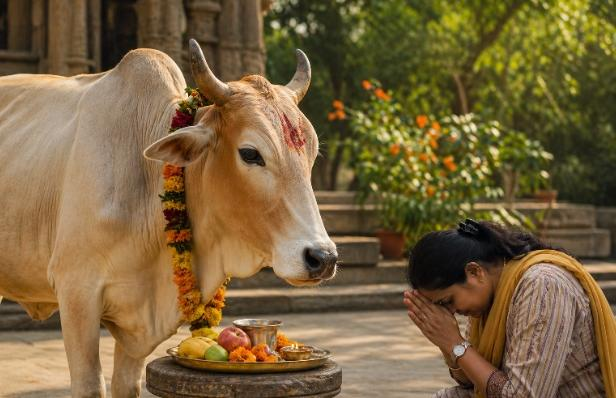
Across nearly every major civilization in recorded history, cattle have held a place of profound significance. They appear in cave paintings, in sacred texts, on temple walls, and at the center of creation myths. The bull and the cow are among the most universally revered animals in human culture, symbols of strength, abundance, fertility, and the deep bond between people and the land that feeds them. That reverence was not arbitrary. It was earned.
People who lived close to cattle understood something intuitively that modern nutritional science has since confirmed: the animal was not just useful. It was sacred because it sustained life in a way that little else could. And of all the gifts the animal offered, perhaps none was more prized than its liver.
The Bull as a Symbol of Strength and Vitality
In ancient Egypt, the Apis bull was worshipped as a living god, believed to channel the power of Ptah, the creator deity. In Mesopotamia, the Bull of Heaven appears in the Epic of Gilgamesh as a creature of immense divine force. The Norse associated the ox with Odin, and in Celtic traditions, the bull represented sovereignty and wealth. Across the Hindu tradition, Nandi the bull serves as the sacred vehicle of Shiva, a symbol of strength, loyalty, and unwavering devotion.
What is consistent across these wildly different cultures is the association of cattle with life force. Strength, fertility, abundance, protection. These are not arbitrary assignments. They reflect the lived experience of communities who depended on cattle not just for labor but for nutrition, and who recognized in the animal a source of genuine vitality.
Why Our Ancestors Prized the Liver Above All
In many ancient traditions, the liver was considered the seat of the soul. Babylonian priests practiced haruspicy, reading the livers of sacrificed animals to divine the future. The Greeks believed the liver was where the blood was made and where the passions lived. The Roman physician Galen described the liver as the principal organ of the body. Long before anyone understood biochemistry, humans recognized that the liver was something special.
Traditional hunter-gatherer cultures and pastoralist communities worldwide were known to offer the liver to the hunters who made the kill, or to the elders and pregnant women in the community, those whose need for concentrated nourishment was understood to be greatest.
This was not superstition. It was practical wisdom encoded as ritual. The liver delivered something that other parts of the animal did not, and people knew it, even without the vocabulary to explain why.
What Modern Nutrition Confirms About This Ancient Wisdom
Today we have the language to describe what those cultures understood instinctively. Beef liver is one of the most nutrient-dense foods available, delivering concentrated amounts of vitamin B12, folate, riboflavin, iron in its highly bioavailable heme form, zinc, copper, vitamin A as preformed retinol, and CoQ10. These are not trace amounts. Beef liver provides more of many of these nutrients per serving than nearly any other food on earth.
What makes it different from a synthetic multivitamin is the same thing that made it valuable to our ancestors: it is a whole food. The nutrients arrive together in their natural ratios, with the cofactors and compounds that help the body recognize and absorb them. It is nourishment in the form that the human body evolved alongside.
Honoring the Whole Animal in the Modern World
There is a growing movement among people who care about both nutrition and ethics toward nose-to-tail eating, the practice of using the whole animal rather than only the most convenient cuts. It is, in many ways, a return to the kind of reverence that ancient cattle-herding cultures practiced naturally. Wasting nothing. Honoring what the animal provides.
For people who want to participate in that philosophy but find it difficult to incorporate organ meat into their regular cooking, a well-sourced beef liver supplement offers a practical bridge. The best products use grass-fed and grass-finished beef liver from cattle raised by American ranchers, freeze-dried to preserve the nutritional integrity of the whole food, and encapsulated with nothing added. One ingredient. The whole story.
Choosing cattle that were raised well, that grazed on open pastures and lived as cattle are meant to live, is itself a form of that ancient respect. The Piedmontese breed, known for its lean, nutrient-rich beef and its long association with careful, traditional ranching, carries that heritage forward. When the sourcing is traceable from the ranch to the capsule, you are not just buying a supplement. You are participating in a chain of accountability that connects the food on your shelf to the land and the animal it came from.
The Symbol and the Substance
The bull has represented strength and life force in human culture for thousands of years. That symbolism did not emerge from myth alone. It emerged from experience, from the lived reality of communities who depended on cattle for their survival and who recognized in the animal a source of sustaining power.
When you choose to nourish yourself with beef liver sourced from well-raised cattle, you are in some sense participating in a tradition far older than any supplement label. The form has changed. The principle has not.
