
Can a Bottle Labeling Machine Reduce Packaging Errors?
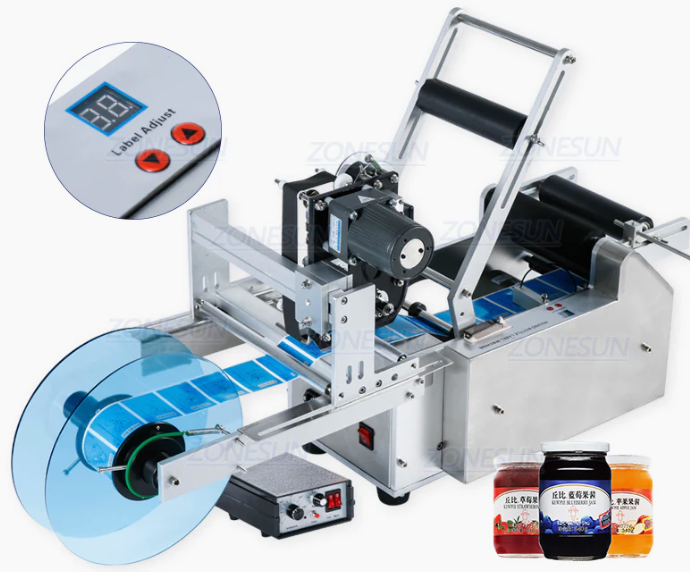
In modern manufacturing, accuracy and efficiency are essential, especially in the packaging process. Labeling errors are one of the most common issues businesses face, often leading to product recalls, customer complaints, wasted materials, and even damage to brand reputation. For companies aiming to maintain high quality and consistency in high-volume production, a bottle labeling machine has become an indispensable tool for reducing mistakes and optimizing workflows. This machine not only improves labeling precision but also enhances production efficiency and overall operational performance.
How Labeling Errors Occur
In packaging operations, labeling errors frequently arise from manual processes and human intervention. The main reasons for this situation include:
1. Incorrect label placement – Labels may be off-center or tilted, affecting product appearance and professionalism.
2. Mismatched product information – Barcodes, batch numbers, or expiration dates may not align with the actual product, increasing recall risks.
3. Inconsistent alignment – Variations between bottles can reduce brand consistency and consumer trust.
4. Operator fatigue – Manual labeling over long shifts increases the likelihood of errors and slows down production.
5. Label material or environmental issues – Label quality, bottle surface smoothness, temperature, or humidity may affect adhesion and accuracy.
Even small labeling mistakes can impact customer experience, damage brand image, and increase costs, making reliance on manual labeling risky for high-volume operations.
Key Advantages of Using a Bottle Labeling Machine
Using a bottle labeling machine to automate the labeling process provides multiple advantages:
l High precision – Sensors and programmable controls detect misaligned labels and adjust placement automatically.
l Consistent quality – Labels are applied uniformly on every bottle, enhancing product appearance and brand image.
l Increased production speed – Automation is much faster than manual operation, helping businesses meet large orders efficiently.
l Reduced error rate – Automation minimizes human mistakes, lowering the risk of mislabeling or rework.
l Lower labor costs – Automated machines reduce the need for extensive manual labor over time.
These benefits ensure smoother production workflows and maintain high-quality labeling standards for every batch.
Popular Types Of Bottle Labeling Machines Used In Industry
Different production needs require different types of bottle labeling machines:
1. Wrap-around labeling machines – Ideal for cylindrical bottles, providing 360° coverage; commonly used in beverages and cosmetics.
2. Pressure-sensitive labeling machines – Suitable for irregular bottle shapes or high-precision labeling, widely used in pharmaceuticals and nutraceuticals.
3. Top and bottom labeling machines – Apply labels to the top and bottom of bottles for dual or multiple labeling requirements.
4. High-speed automatic labeling machines – Designed for large production lines, capable of processing hundreds to thousands of bottles per minute.
Selecting the appropriate machine based on bottle shape, label material, and production volume is critical for minimizing labeling errors.
The Impact on Production Efficiency
Companies using a bottle labeling machine typically see significant improvements:
l Reduced packaging errors – Labels are consistently accurate and properly aligned.
l Lower downtime – Automatic error correction reduces the need for manual intervention.
l Cost savings – Less waste of labels and bottles, saving materials and money.
l Improved customer satisfaction – Products look professional and reliable, increasing consumer trust.
l Optimized production workflow – Automated labeling streamlines the assembly line, allowing staff to focus on other critical tasks.
Ensuring Long-Term Performance and Accuracy
To ensure long-term stable operation and low error rates, proper maintenance is essential. Regular cleaning of the machine prevents dust, adhesive buildup, and label residue from affecting performance. It is also important to periodically calibrate sensors and rollers to maintain precise label placement. Using high-quality labels that are compatible with the machine ensures optimal adhesion and consistent results. Additionally, operators should be trained to monitor the machine’s performance and promptly address any minor issues. By following these practices, a well-maintained bottle labeling machine can provide reliable and accurate labeling over extended periods, reducing downtime and minimizing production errors.
Conclusion
A bottle labeling machine is a key investment for any business aiming to reduce packaging errors and increase operational efficiency. By automating the labeling process, companies can achieve precise and consistent results while reducing material waste and labor costs. Automation also accelerates production, improves product presentation, and enhances customer satisfaction, strengthening overall brand reputation. For businesses seeking to optimize production lines, maintain high-quality standards, and protect brand value, implementing a bottle labeling machine is both practical and highly effective.